On last October 7 we were at Teatre del Raval in Gandía participating in Jornades #EuropaalRaval with Insultarte project. This conference is promoted by Econcult, Area of Research in Economics of Culture and Tourism of University of Valencia.
This conference is in the frame of European project called 3C4Incubators.
Insultarte offered 3 talks:
"Good practices in culture" some ideas for living from culture with dignity. By Iñaki López.
"Licenses, copyrights and intellectual property." By Juan Lesta.
"I am creator I am Legal" on legal framework of a creator or cultural organizations. By Vanesa Castro.
After the talks we opened a panel discussion in which we analyze some specific cases of the audience.


_

Showing posts with label conference. Show all posts
Showing posts with label conference. Show all posts

10 November we will be at NORMAL

This Thursday November 10 we will make a presentation about Fur Alle Falle and some of our projects.
It will be in NORMAL, cultural intervention space, at the University of Coruña.
Here the website: www.istoenormal.org
See you there!
!Agitation at Faculty of Fine Arts - Complutense University of Madrid

On February 28 we were in the Faculty of Fine Arts of the Complutense University of Madrid, making our chat/conference !Agitation at "la trasera" , a curious place where students are developing activities. The talk was part of the programme Acciones Complementarias . There appeared some pupils, about seven or eight, some teachers and organizers and some cultural observers.
Around a table we showed some of our projects, emphasizing in their development. Teaching them the keys for their implementation and results.
The models are based on exploiting the creative potential of small communities, and undertaking joint projects that seek to be totally self-managed.
We advise attendees on how to conduct participatory events, how to mount a network with other people and make a project more powerful, tricks to make things better, and how to get benefits for all the net-workers.
Projects we showed were performed in a gallery, in a CSO (Squat Social Center), in a Civic Center and in a Cultural Associaciation in a rural area.
After the chat/conference, which lasted an hour and a half, we went to drink some beers into the space next to the cafeteria, where we talked with some of the students. They told us about their projects, one located in the same space: El espacio POOL (click + info)
We visited another project from the students, it was an ephemeral construction in one of the corridors of the faculty. + info - El Pasillero
 In this space we found various interventions, like this one:
 It was a nice evening and a rewarding experience.
!Agitation
In this lecture we present several performance models as a starting point to create cultural events and networks. We show several Fur Alle Falle projects, the keys for the realization and the results obtained.
About !Agitation, cultural dynamization and creation of networks.
For us, !Agitating is to make changes, dynamizing cultural and social structures.
Cultural Agitation is to promote active citizenship, capable of carrying out their own cultural projects.
Cultural agitator works as a link and initial motor of a network, promoting the participation of local actors in the creative process
The work of the agitator
Building tools, resources and innovative models. Teaching guidelines for reproducing this models, so that groups of citizens could learn and adapt to their circumstances and their evolution.
Updating or re-inventing spaces for use.
Improving the working methods of the groups.
Creating projects based on sustainability and self management (through the exchange of goods and services).
The work should contribute to the commons.
It´s not a "cultural animator". It must lead to changes and propose solutions to ideological or aesthetic problems.
It is not an "activist" because its function is not only political or social, is also aesthetics, acting on leisure (although it is hard not to be political).
Institutional or independent.
Being a cultural agitator out of the industry and institutions is complex, often not recognized as professional work and often not remunerated.
Many times cultural agitators are rejected or condemned because of the fact of causing changes that generate crisis (of power, ideas, etc).
In industry, the agitator could be a publicist or a community-manager. Institutionally, he would be a culture or social issues technician or councilor. Cultural agitator should spend time with citizens groups, to find common interests.
He should know the creative potential and the different skills of the members of their community. Then, to promote activities on these interests and abilities, creating knowledge sharing and social and cultural activity.
Voluntary or Involuntary There are many cases where cultural agitation happens involuntarily, often caused by media or political interests. Check the #vigalondo case some weeks ago. Suddenly because of an ingenious tweet, some people thought about the limits of humor, censorship, and the use of social-networks tools. Another example is our project www.finisgloriaemundi.
The agitator has to move structures that seem irremovable. But this is another issue.
Scope
The models we show, stimulate the socio-cultural life of a community and create networks. Focus on sharing the nearest creative potential of your environment and your social-network.
The results of our actions are observed in a medium and long term. They are presented as products, speeches, lectures, events, happenings or performances.
Projets we show in the conference are:
Kitsch Kitchen
Torneo Passion
Kafé tà Kabaré
Ruralc
Ready to Change. Ljubljana.
 We were in Ljubljana (Slovenia) in the forum
" Ready to Change ? "
"Thinking culture as a factor of economic & social innovation"
organized by Sostenuto
 The event consisted of three days of talks and activities in 3 main sites, well located, close, and in the center of the city.
The forum program was raised about two blocks, namely:
Open University and Exchange of Experiences.
Open Univerity conferences were about these issues:
Cultural Rights
Economy and Employment
Ecology and Biodiversity
Wealth and Poverty
Social Changes
Urbanity and New Governance
The exchange of experiences focused on the following topics:
Nomadic practices
Art in Context
Ephemeral Practices
Self-management, co-management and Co-organization (New Collectivism)
Space in Between
Utopia and Poetry
 * We discuss those lectures we think they´re more interesting:
Simona Levi - she showed La Ex.
We emphasize these ideas:
Remove the middlemen - the artist should be the main agent - the mediator must be a partner, not an exploiter.
As cultural producers we have to sell our skills.
Xavier Comtesse - of a swiss Think Tank.
He offered a positivistic view of Internet, but perhaps too naïve in our view.
Remembering us ideas from 2001 as TAZ by Hackim Bay.
Some interesting ideas of his lecture:
New Territories: Facebook, or a wireless network, as chat and no communication rooms.
The idea of "co-" common goods- between public & private.
The idea of global-local-global (such as rock & roll in Africa)
Internet causes an asymmetry in knowledge. The student knows more than the teacher, or the patient than the doctor.
We showed him the project www.guifi.net. He though it´s very interesting and appropriate to his speech.
Pau Raussel Köster - of Econcult Research Unit, University of Valencia.
He presented some statistics of a team of economists, which showed that the sector of culture and cultural workers is one of the most innovative and where more capacity is developed.
He talked us about the role of innovation in the links between creative sectors and economic growth.
Statistics are not entirely reliable for cultural producers like us, because are based on questionnaires that were distributed to university alumni after 5 years of job placement, self-employed or professional workers.
These studies refer to the cultural sector, missing all those who are neither independent, nor employees, or who work as volunteers or through partnerships. We think there is a large part that stays out of the statistics.
Jaron Rowan, YProductions, he offered a lecture about cultural entrepreneurship. Master of Goldsmith in London stiles. We emphasize this idea:
The creative industries are based on cooperation and creativity, and are those that can promote the commons.
Cultural industries are fed mainly on voluntary work of creative people, as well as "collaboration". The work of these people is characterized by precarity and instable market.
He also raised the issue of copyright and the "commons" with funny anecdotes, like the one of Paris Hilton and her "That's hot", phrase mark she has registered as own.
 Sacha Kagan did a "Systems Thinking Game" as a workshop.
Based on "The systems thinking playbook" by Linda Booth Sweeney and Denis Meadows., that you can download from here
* One of the purpose and goals of the Forum was the construction of a Manifesto.
A proposal that generated a debate within and outside the courtroom.
For us it was good to rethink, in group, the definition of "culture" and its applications.
It was attempted to place the cultural sector in society. Showing, in our view, that culture is not motivated by the cultural sector, but rather it is society that is ahead of cultural institutions.
 * Within the exchange of experiences of specific proposals, in Spaces in Between, we found some very interesting. There seems to be a trend that responds to typical action models of squatted social centers. As socio-cultural projects of collective gardens and green spaces within the city, local entertainment, projects around the food, etc.
An interesting project, close to the Situationist drift was that of the French Icimeme, with Jacques Boyer
The activation of a CSO Morion in Venice , hrough re-biennale. By Franz Koppelstätter, member form IKA
The project of a group of Serbia, SKART
The intervention of an architect from Ljubljana, Apolonija Sustersic, in a district of Germany: Hustadt project.
The Festval MAPA, in a village of 140 inhabitants of Catalonia, organized by Thomas Aragay.
Citema ,another very interesting project in rural Italy.
Bunker, they present this project for an stoped space inside the city:
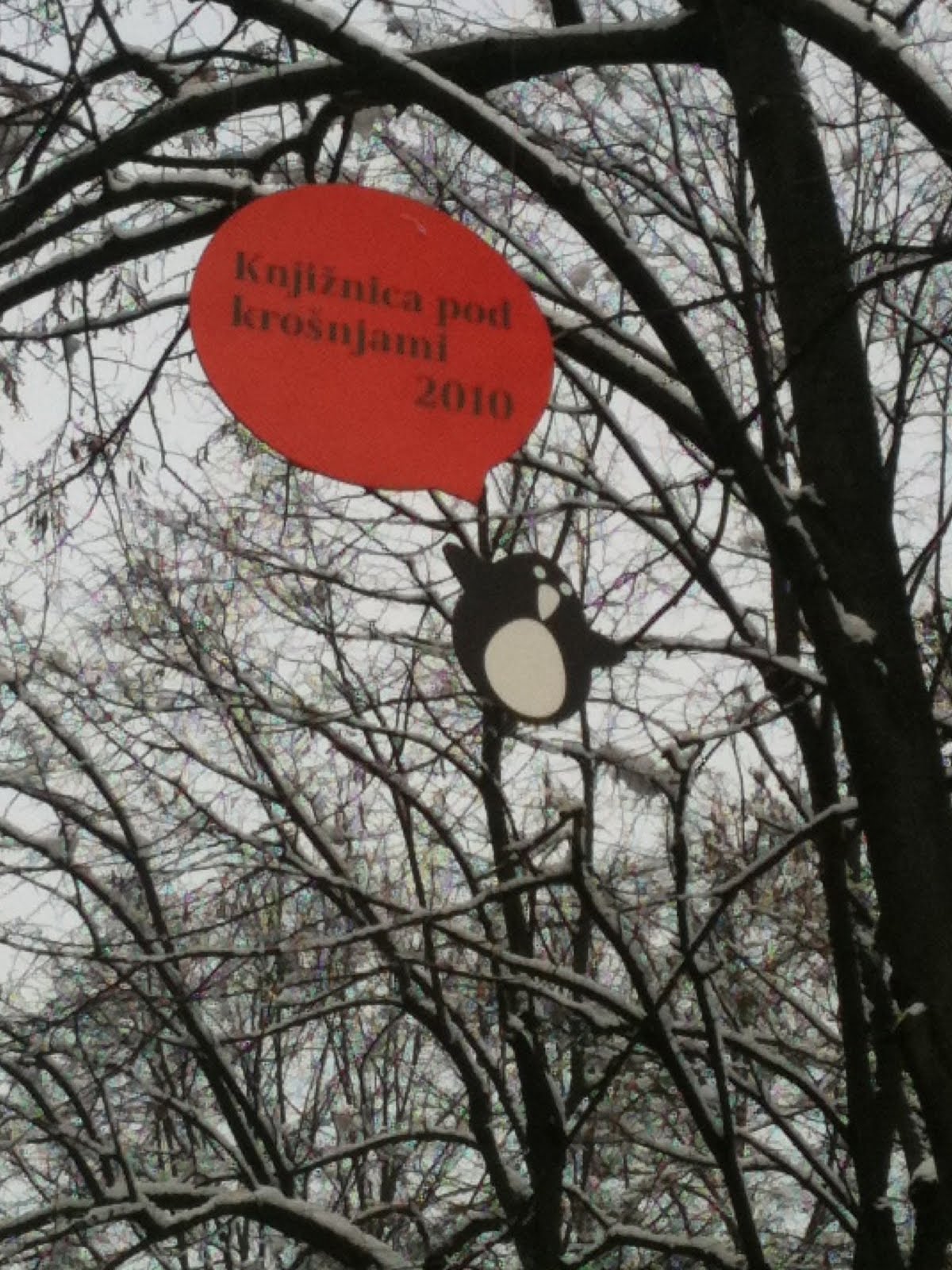
One of the best practice experiences was the revival of a park. The association Bunker, host of the Forum, held a party in Tabor Park. A party "verbenera" where they invited to two types of soups, mulled wine, honey liquor and tea. With a player piano music, at night and surrounded by snow.
 We briefly presented our conference !Agitation, which we discuss some of our projects of cultural agitation.
You can watch the promo video:
Thank`s to Bunker & Sostenuto people for so good organization
hope changes are caming soon
Subscribe to:
Posts (Atom)
